
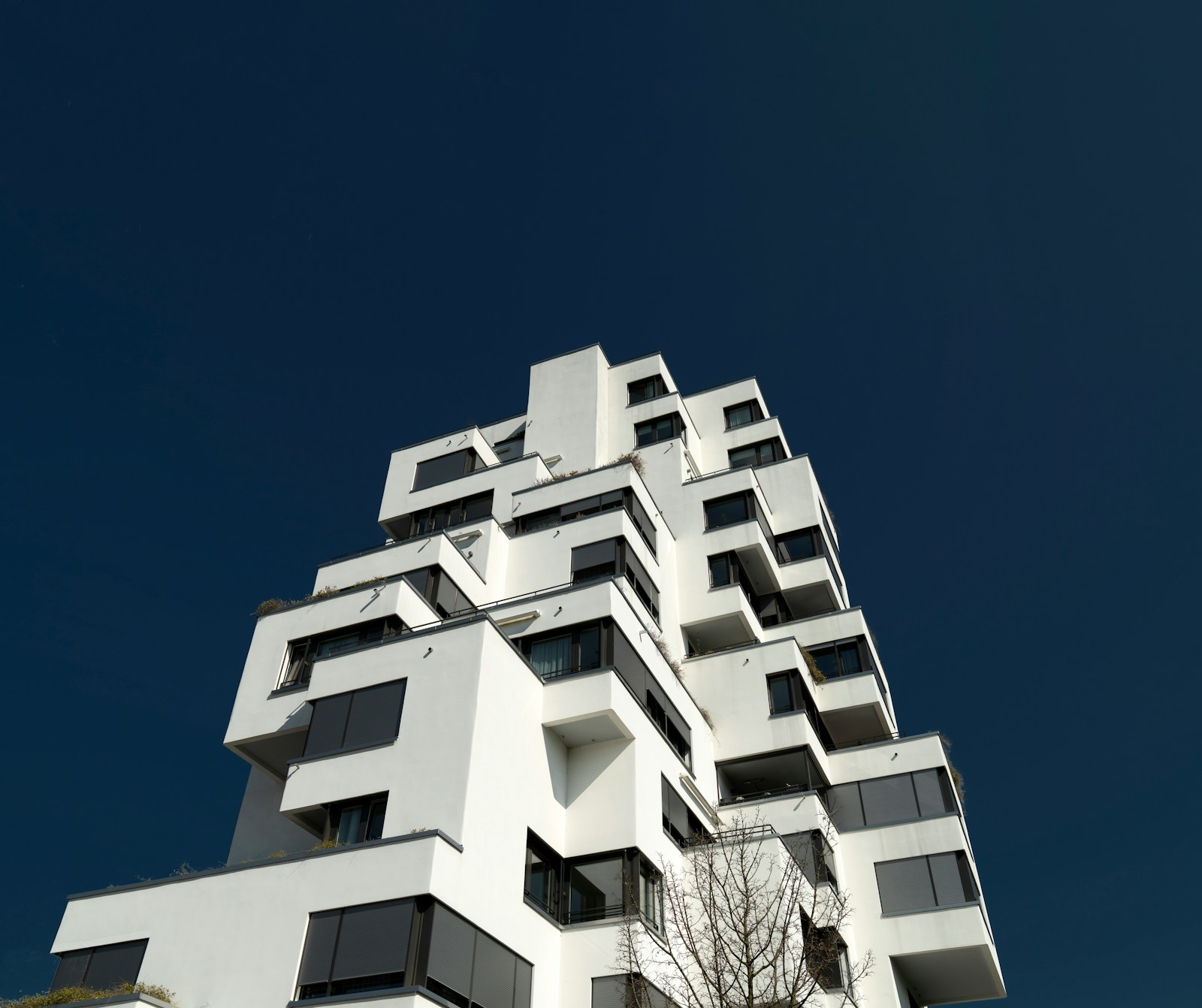
Ein Investor aus dem Raum Zürich, Anfang fünfzig, suchte seit gut einem Jahr sein erstes Mehrfamilienhaus. Ein Dutzend Besichtigungen, mehrere Bieterverfahren, jedes Mal dasselbe Ende: Den Zuschlag erhielt ein institutioneller Käufer — eine Pensionskasse, eine Anlagestiftung, ein Fonds. Nicht, weil sein Dossier schwach gewesen wäre. Sondern weil er an der A-Lage gegen Kapital bot, das mit Renditeanforderungen kalkulieren kann, die für einen privaten Investor wirtschaftlich kaum darstellbar sind.An investor from the Zurich area, in his early fifties, had been looking for his first apartment building for a good year. A dozen viewings, several bidding processes, each time the same ending: the property went to an institutional buyer — a pension fund, an investment foundation, a fund. Not because his dossier was weak. But because, in a prime location, he was bidding against capital that can work with yield requirements barely viable for a private investor.
Seine Erfahrung ist kein Einzelfall — sie ist das Marktbild 2026. Wir haben die aktuellen Marktdaten der FPRE-Metaanalyse und von Raiffeisen ausgewertet und ordnen sie aus der Finanzierungs- und Transaktionsperspektive ein: Wo kommen private und semi-professionelle Investoren realistisch noch zum Zug?His experience is no isolated case — it is the market picture of 2026. We have analysed the latest market data from the FPRE meta-analysis and from Raiffeisen and place them in a financing and transaction perspective: where can private and semi-professional investors realistically still get their chance?
Die Marktlage 2026 in vier KennzahlenThe 2026 market situation in four key figures
Unter 1%Below 1%
Leerstand MietwohnungenRental apartment vacancyDie Angebotsquote im Mietwohnungsmarkt verharrt bei rund 1% und damit nahe am historischen Tiefstand. Für die nächste Leerwohnungserhebung erwartet Raiffeisen («Immobilien Schweiz» 2Q26) weiter rückläufige Leerstände auf unter 1%.The supply rate in the rental apartment market remains at around 1% and thus close to its historical low. For the next vacancy survey, Raiffeisen («Immobilien Schweiz» Q2 2026) expects vacancies to decline further to below 1%.
+1,3%
Marktmieten Wohnen p.a.Residential market rents p.a.Die Marktmieten für Wohnungen sind im 1. Quartal 2026 um 1,3% gegenüber dem Vorjahr gestiegen (FPRE-Metaanalyse Q2 2026). 56% der befragten Immobilienmarkt-Experten erwarten weiter steigende Wohnungsmieten.Market rents for apartments rose by 1.3% year-on-year in the first quarter of 2026 (FPRE meta-analysis Q2 2026). 56% of the surveyed real estate market experts expect residential rents to keep rising.
Rund +3%Around +3%
Preisprognose MFH 2026Price forecast apartment buildings 2026Für Mehrfamilienhäuser wird für 2026 ein Preiswachstum von rund 3% prognostiziert (UBS, zitiert in der FPRE-Metaanalyse Q2 2026). Der MFH-Preiserwartungsindex liegt mit 64,0 Punkten weiterhin klar im positiven Bereich.For apartment buildings, price growth of around 3% is forecast for 2026 (UBS, cited in the FPRE meta-analysis Q2 2026). At 64.0 points, the apartment-building price expectations index remains clearly in positive territory.
1,75–2,00%
Diskontsätze Top-MFH ZürichDiscount rates prime buildings ZurichDie minimalen Diskontierungssätze für Top-Mehrfamilienhäuser in Zürich liegen netto und real zwischen 1,75 und 2,00%, im Mittel bei 1,86% (FPRE-Metaanalyse, Stand Juni 2026) — ein Ausdruck des enormen Anlagedrucks.The minimum discount rates for prime apartment buildings in Zurich stand, net and real, between 1.75 and 2.00%, averaging 1.86% (FPRE meta-analysis, as of June 2026) — an expression of the enormous investment pressure.
Das Zinsumfeld stützt diese Konstellation. Die Nationalbank belässt den Leitzins bei 0,0% (FPRE-Metaanalyse Q2 2026), und Raiffeisen erwartet auf absehbare Zeit weder Zinssenkungen noch -erhöhungen — entsprechend auch keine grösseren Bewegungen bei den Konditionen längerfristiger Festhypotheken. Immobilienanlagen bleiben gemäss Raiffeisen im Vergleich zu festverzinslichen Anlagen attraktiv; die anhaltenden Kapitalflüsse in den Markt sorgen für weitere Wertsteigerungen.The interest rate environment supports this constellation. The National Bank keeps its policy rate at 0.0% (FPRE meta-analysis Q2 2026), and Raiffeisen expects neither rate cuts nor increases for the foreseeable future — and accordingly no major movements in the terms of longer-dated fixed-rate mortgages either. According to Raiffeisen, real estate investments remain attractive compared with fixed-income investments; the ongoing capital flows into the market drive further value appreciation.
Das Renditeproblem der A-LagenThe yield problem of prime locations
An den Top-Lagen der Grosszentren konkurrieren private Käufer mit der geballten institutionellen Nachfrage: Pensionskassen, Versicherungen, Fonds und Anlagestiftungen stehen unter Anlagedruck und können mit tiefsten Renditeanforderungen kalkulieren. Das Resultat zeigt die Bewerterumfrage der FPRE-Metaanalyse: Für ein neuwertiges Mehrfamilienhaus im Top-Stadtquartier von Zürich liegen die minimalen Diskontierungssätze aller sieben befragten Bewertungshäuser in einem schmalen Band von 1,75 bis 2,00% — netto und real.In the prime locations of the major centres, private buyers compete with concentrated institutional demand: pension funds, insurers, funds and investment foundations are under investment pressure and can calculate with the lowest yield requirements. The result is shown by the valuer survey in the FPRE meta-analysis: for a near-new apartment building in a top city district of Zurich, the minimum discount rates of all seven surveyed valuation firms lie in a narrow band of 1.75 to 2.00% — net and real.
Minimale Diskontierungssätze (netto, real) für ein neuwertiges MFH an Top-Lage in Zürich, Stand 15.06.2026. Skala ausschnittsweise ab 1,5%. Befragte: CBRE, Colliers, EY, FPRE, JLL, PWC, ZKB (anonymisiert). Quelle: FPRE-Metaanalyse Immobilien Schweiz, Q2 2026.Minimum discount rates (net, real) for a near-new apartment building in a prime location in Zurich, as of 15.06.2026. Scale truncated, starting at 1.5%. Respondents: CBRE, Colliers, EY, FPRE, JLL, PWC, ZKB (anonymised). Source: FPRE meta-analysis Immobilien Schweiz, Q2 2026.
Was heisst das konkret? Ein Diskontsatz von unter 2% netto bedeutet: Nach Abzug von Bewirtschaftung, Unterhalt und Rückstellungen bleibt an diesen Lagen eine laufende Verzinsung, die kaum Puffer lässt — die Rendite hängt dann weitgehend an der künftigen Wertsteigerung. Ein zu hoher Einstandspreis verzeiht an der A-Lage keine Fehler. Für institutionelle Anleger mit Jahrzehnten Anlagehorizont und tiefen Renditezielen mag das aufgehen — für private Investoren mit Fremdfinanzierung wird die Luft dünn.What does that mean in concrete terms? A discount rate below 2% net means: after deducting management, maintenance and provisions, these locations leave a running return that offers barely any buffer — the yield then depends largely on future value appreciation. In a prime location, too high an entry price forgives no mistakes. For institutional investors with decades-long horizons and low return targets this may work out — for private investors using debt financing, the air gets thin.
Wo private Investoren zum Zug kommenWhere private investors get their chance
Real zum Zug kommen private Käufer deshalb dort, wo die institutionelle Konkurrenz ausdünnt: an B- und C-Lagen, in kleineren Städten und in den Agglomerationen. Viele dieser Objekte liegen unter der Mindestgrösse institutioneller Tickets — genau hier entstehen die Gelegenheiten für Investoren, die schnell und sauber vorbereitet handeln können.Private buyers therefore genuinely get their chance where institutional competition thins out: in secondary and tertiary locations, in smaller towns and in the agglomerations. Many of these properties fall below the minimum size of institutional tickets — and this is precisely where opportunities arise for investors who can act quickly and with clean preparation.
Tiefe Rendite, hohe SicherheitLow yield, high security
Rendite: stark komprimiert — Diskontsätze in Zürich bei 1,75–2,00% netto real (FPRE). Wettbewerb: institutionell geprägt, oft Bieterverfahren. Liquidität: sehr hoch, Wiederverkauf praktisch jederzeit. Risiko: minimales Ertragsrisiko — dafür wenig Puffer im Preis.Yield: heavily compressed — discount rates in Zurich at 1.75–2.00% net real (FPRE). Competition: institutionally dominated, often bidding processes. Liquidity: very high, resale practically at any time. Risk: minimal income risk — but little buffer in the price.
Mehr Rendite, mehr VerantwortungMore yield, more responsibility
Rendite: spürbar höhere Anfangsrenditen als an Top-Lagen. Wettbewerb: weniger institutionelle Käufer — Zugang und Geschwindigkeit entscheiden. Liquidität: geringer, der Käuferkreis ist kleiner. Risiko: stark objekt- und mikrolagenabhängig — Mieterstruktur, Anbindung und Mietzinspotenzial gehören geprüft.Yield: noticeably higher initial yields than in prime locations. Competition: fewer institutional buyers — access and speed are decisive. Liquidity: lower, the pool of buyers is smaller. Risk: strongly dependent on the property and micro-location — tenant structure, connectivity and rental income potential must be examined.
Wichtig: «B-Lage» ist kein Freibrief. Entscheidend sind Mikrolage, Verkehrsanbindung, Bevölkerungs- und Beschäftigungsentwicklung sowie der Zustand des Objekts. Die Knappheit am Mietwohnungsmarkt ist zwar ein gesamtschweizerisches Phänomen — sie trägt aber nur dort, wo langfristig Nachfrage nach dem konkreten Wohnungsmix besteht.Important: a «secondary location» is no free pass. What matters is the micro-location, transport connections, population and employment trends as well as the condition of the property. The scarcity in the rental apartment market is indeed a nationwide phenomenon — but it only holds where there is long-term demand for the specific apartment mix.
Unser Investor hat seine Suche inzwischen neu ausgerichtet — auf geprüfte Lagen in der zweiten Reihe. Ob sich ein Objekt dort rechnet, entscheidet allerdings nicht der Kaufpreis allein, sondern die Finanzierung. Wann der Hebel rechnet, lesen Sie in Teil 2 →Our investor has since reoriented his search — towards vetted locations in the second row. Whether a property pays off there, however, is decided not by the purchase price alone, but by the financing. Read when leverage pays off in Part 2 →